

Service corporations are complicated entities that play a critical function in the modern economic situation, promoting not only the arrangement of items and solutions but likewise advancement and work. A corporation is a lawful entity that is separate and unique from its proprietors, supplying them with minimal obligation. This implies that the personal properties of the investors are secured from the firm's responsibilities. Corporations can enter agreements, be and sue sued, own possessions, and undergo tax. Their structure is developed to make it possible for financial investment with the sale of shares, which represent a section of ownership in the business. This framework aids firms to increase the capital required for growth and advancement without requiring the owners to birth the whole monetary risk.
The administration of a corporation is commonly structured around 3 primary teams: the investors, the board of directors, and the administration group. Investors are the owners of the corporation, and they have electing rights on significant concerns, commonly worked out throughout annual meetings. The board of supervisors is chosen by the shareholders to manage the company's wide policies and make choices on significant matters, consisting of the hiring of executive supervisors. These managers, consisting of the chief executive officer, are accountable for the everyday operation of the business. This splitting up of possession and control is one of the defining characteristics of the business kind and permits professional monitoring of business. In addition, corporations are identified by their capability to proceed forever, going beyond the lives of their individual members. This perpetual existence promotes long-term planning and financial investments, essential for sustained growth and security in an altering economic landscape.
Comprehending Organization Companies: Interpretations and Frameworks
Company firms, as formal entities, play a crucial duty in the contemporary economy, enabling both specific business owners and huge groups of capitalists to collectively undertake commercial ventures while restricting personal obligation and boosting access to funding. A company company is a legal entity that is unique from its owners, that are usually investors. This splitting up shields the owners' individual properties from company financial debts and obligations, which is a fundamental benefit of this company structure. Corporations can enter into agreements, own properties, sue and be taken legal action against, simply like any kind of individual, giving a flexible lawful framework for carrying out organization. The structure of a firm is normally defined by a board of directors in charge of significant decisions and managing basic company affairs, while daily operations are handled by employees and police officers. Investors, on the other hand, possess the utmost control over the company, worked out through their voting civil liberties on considerable issues, consisting of the political election of the board members. This framework permits a clear department of duties and duties, which is important for both operational efficiency and strategic planning. Along with these attributes, corporations should stick to regulatory demands that differ by territory, including enrollment with governmental entities, regular coverage, and adherence to tax obligations. These demands ensure transparency and responsibility, maintaining public count on the organization procedures and monetary reporting of firms.
Comprehending the Structure and Performance of Service Companies
Organization firms operate under a complicated framework that is created to manage large procedures successfully, while sticking to regulative and legal criteria. At the core of every corporation is its lawful entity standing, which divides the business possessions and obligations from those of its owners, thus offering a crucial layer of personal liability defense. This framework allows the company to possess building, participate in agreements, and sue or be filed a claim against as an independent entity. The investors, who are the proprietors of the company, add capital in exchange for shares representing ownership. These shares help with the distribution of profits via returns and enable investors to take part in the administration of the firm through ballot civil liberties commonly worked out throughout yearly meetings. The governance structure of a company is mostly upheld by a board of directors, whose participants are chosen by the investors. This board has the ultimate obligation for managing the corporation's management and making certain that it sticks to its calculated objectives, follow the law, and runs in the very best interests of its investors. Directors choose the senior executives, including the President (CEO), that are entrusted with the everyday management of the firm. These execs deal with whatever from marketing techniques to monetary preparation and operational execution. Besides its inner framework, a company company communicates with external entities with different channels that include, yet are not limited to, market deals, lawful conformity, and ecological obligations. Corporations are required to keep transparency with their stakeholders by regularly disclosing financial performance and tactical direction, typically in the kind of annual and quarterly reports. Firms should navigate complex tax obligation regulations and business regulations, which can vary substantially from one territory to another, impacting their functional strategies and revenue margins. To conclude, the framework of a company firm is meticulously made to stabilize complicated internal monitoring with exterior stress and obligations. This equilibrium aids firms to not just make the most of profits but additionally take care of threats and make certain sustainable development. The dynamic interplay in between shareholders, directors, and execs develops a robust framework that supports this balance, making the business framework a primary version for organizations aiming for considerable scale and reach.
Comprehending the Framework and Feature of Service Companies
Business firms, a fundamental unit in the international economic climate, act as the foundation for entrepreneurial ventures and established business alike. Structured to stabilize administration with growth, these entities are specified by their lawful standing, which separates the firm's identification from that of its proprietors, hence securing individual possessions from business obligations. This separation is important due to the fact that it enables corporations to participate in contracts, own properties, and borrow cash, all under their own name. In addition, corporations are typically defined by their capacity to issue shares of stock, an essential feature that facilitates funding accumulation by drawing in financial investments from a vast range of investors. These investors, consequently, possess restricted obligation, suggesting their financial danger is restricted to the quantity they have spent in the firm, stopping personal monetary mess up as a result of corporate financial debts or lawsuits.
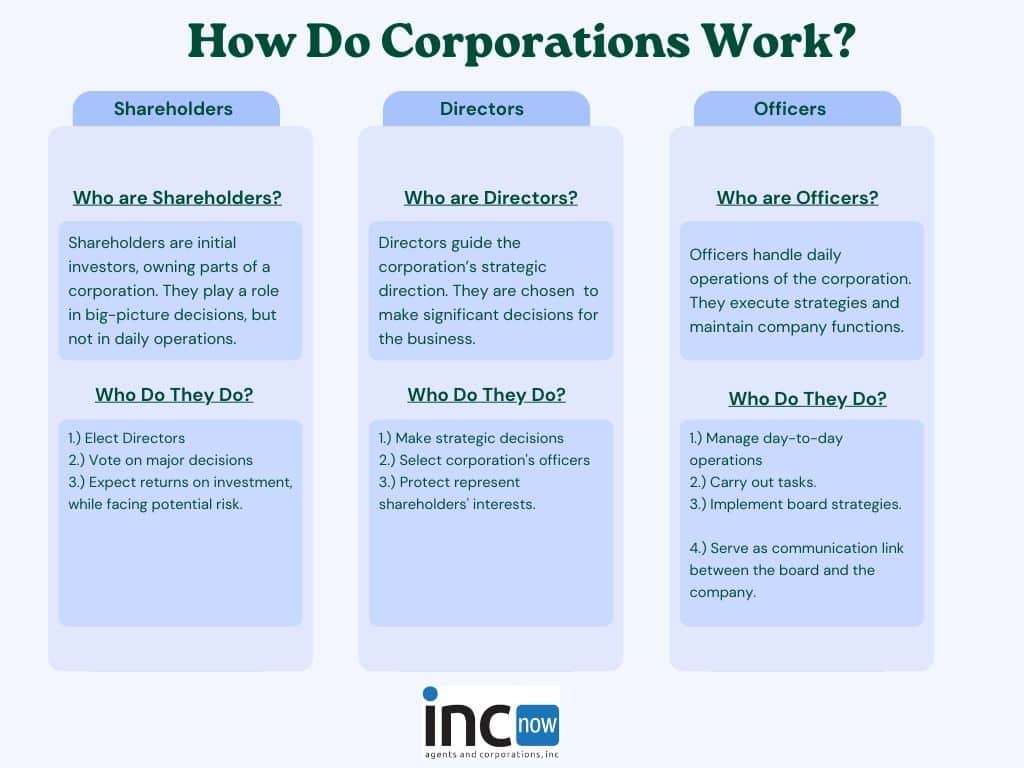
From an organizational point of view, companies are managed by a board of supervisors elected by the shareholders. This board births the best obligation for the firm's strategic direction and administration, overseeing the administration team that takes care of the everyday operations. Such a pecking order is developed to make certain that the rate of interests of all stakeholders, consisting of investors, employees, customers, and the area, are taken into consideration in corporate decision-making. Furthermore, the company's capability to proceed forever, or its continuous presence, allows it to undertake lasting projects and investments, which may be impossible for various other types of organization entities that lack this attribute. This element not only adds to economic security yet additionally to continual development, as companies purchase research and advancement with an expectation that transcends the life-span of its present members.
Company companies need to adhere to rigid regulative demands, consisting of regular monetary coverage, which makes sure openness and accountability. These records are looked at by government companies, financiers, and other stakeholders, supplying an extensive view of the corporation's monetary health and functional success. Such regulative oversight not just secures the rate of interests of the investors however likewise guarantees that the corporation's tasks straighten with moral and lawful requirements. This framework assists maintain public rely on the business field, which is crucial for economic stability and development. As pillars of the contemporary economic climate, companies play a critical role in driving innovation, offering employment, and adding to financial advancement worldwide, thus highlighting their relevance in today's service landscape.
Secret Factors To Consider for Taking Care Of and structuring Service Corporations
In the complicated landscape of organization, the structure and monitoring of firms play pivotal functions in identifying their success and sustainability. A firm, necessarily, is a legal entity unique from its proprietors, qualified of possessing residential property, entering right into agreements, and performing organization in its very own right. This splitting up supplies business shareholders with restricted obligation, a fundamental benefit that protects personal properties from company debts and liabilities. Developing a company calls for cautious preparing around its structure, which normally encompasses the board of officers, shareholders, and supervisors, each playing essential and one-of-a-kind functions. Shareholders, the owners of the corporation, invest funding and have the paramount obligation of choosing the board of directors. The board, subsequently, supervises the company's broad policies and decision-making, and appoints police officers that manage the day-to-day procedures. american university business administration requirements of this structure is heavily reliant on clear delineation of duties and durable governance policies aimed at preventing conflicts of interest and promoting transparency. Effective business monitoring thus includes not only calculated business planning and financial acumen but likewise extensive governance methods. Adjusting to global service environments requires companies to be versed in conformity with differing global legislations and regulations, which can substantially affect business operations. A corporation operating internationally have to navigate with different tax obligation legislations, employment legislations, and ecological guidelines, which can be required however difficult for legal and moral service operations. Inevitably, the durability and profitability of a corporation depend upon how well it stabilizes these complicated components, making certain an unified placement in between legal structures, market techniques, and corporate administration.